 Hazel Milla
The news is flooded with reports of traumatic incidents, yet when describing someone who experiences trauma without receiving direct bodily injury, reporters may describe survivors as “physically unharmed.” However, even when no visible injuries are present, trauma can have lasting consequences–both psychological and physical. Children are especially at risk of persistent harm from traumatic exposure given the unique vulnerability of rapid developmental periods.
While trauma exposure is associated with conditions such as cardiovascular disease, diabetes, and chronic pulmonary disease, risk for these diseases is further amplified with post-traumatic stress disorder (PTSD) symptoms and diagnosis. Other psychiatric conditions associated with trauma, such as depression, have also been linked to chronic disease and premature death. Notably, not everyone exposed to trauma will develop long-lasting psychiatric issues. An international report by the World Mental Health Surveys indicates that although 70.4% of respondents reported experiencing a traumatic event, only 5.6% of these individuals went on to develop PTSD. These numbers leave researchers wondering why some individuals develop trauma-related psychiatric conditions while others do not and what this means for their long-term health.
Why does only a subset of people develop long-term mental health conditions after trauma?
Numerous factors increase vulnerability to mental health problems after trauma, including childhood abuse, gender, age, poverty, and genetic background. The nature of the trauma may also influence psychiatric outcomes with severe injury, prolonged exposure, and sexual assault linked to higher PTSD risk.
To understand how these risk factors can contribute to psychiatric problems, it helps to start with the fundamentals of the stress response. When an individual experiences a stressful event, the brainstem activates the sympathetic nervous system response. The adrenal glands, located on top of the kidneys, are recruited to release adrenaline and norepinephrine. These chemicals help increase alertness and responsiveness to potential danger. Heart and breathing rates rise, and immune system functioning increases to prepare for possible infection or injury. Common behaviors that occur during this response include fighting, fleeing, freezing, or fawning.
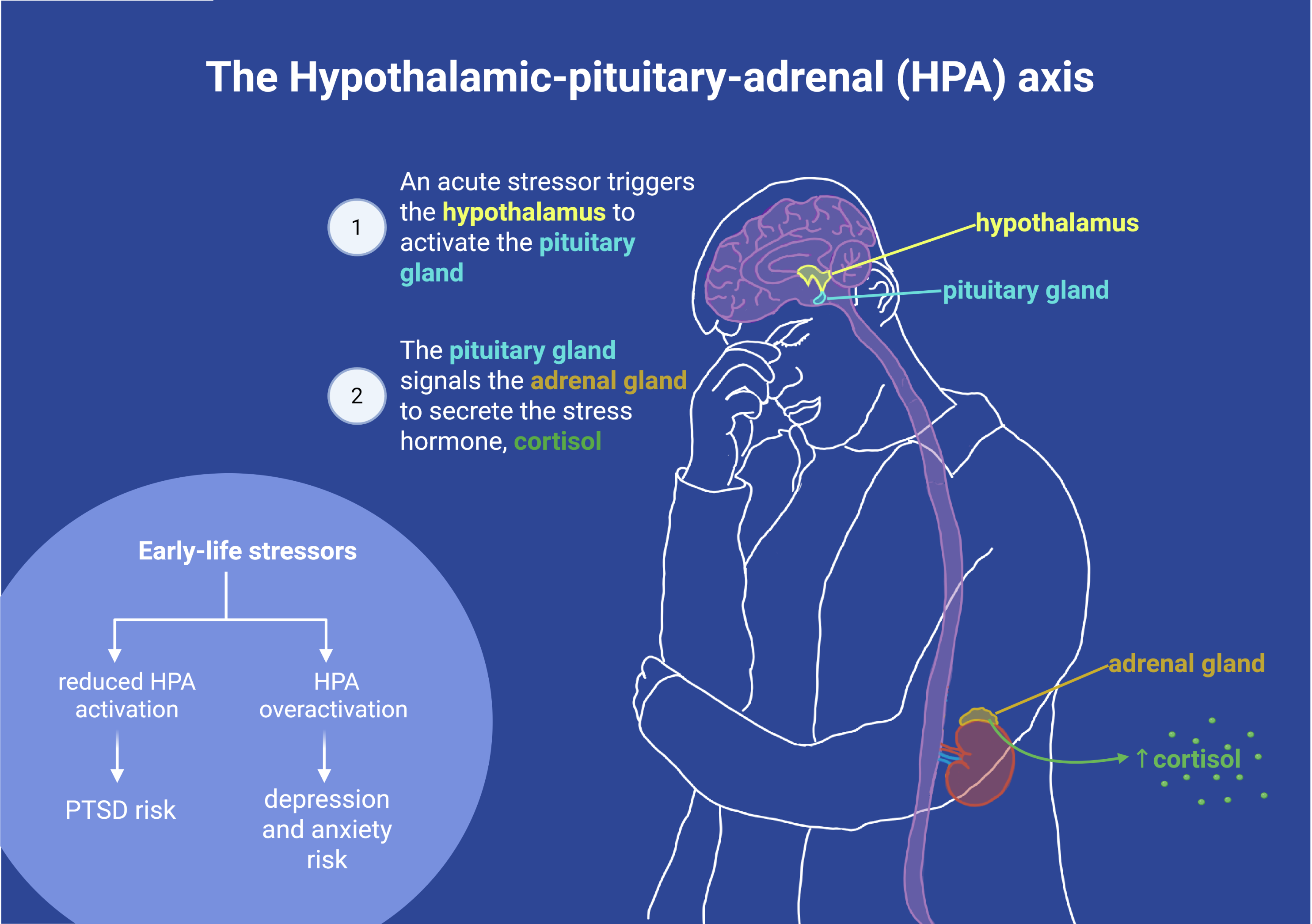
After the sympathetic nervous system response is initiated, another system is mobilized: the hypothalamic-pituitary-adrenal (HPA) axis. A structure in the brain called the hypothalamus first signals to the pituitary glands, which then direct the adrenal glands to secrete cortisol, the body’s primary stress hormone. During this stage, immune function fluctuates and blood glucose levels surge. Because glucose is the body’s primary source of energy, this surge energizes the brain, blood, and muscles. Meanwhile, other processes are put on hold, with digestive and reproductive functions decreasing. In children, growth is also paused. This selective allocation of energy allows the body to better channel resources into staying alive in the short-term. Cortisol helps enact these changes by binding to glucocorticoid receptors (GRs) throughout the body. This interaction changes how cells function, helping to prime the body for immediate survival. A negative feedback loop–in which cortisol binds to GRs in the hypothalamus and pituitary glands, inhibiting further cortisol production–prevents excessive HPA activation and ensures this response doesn’t keep the body stuck in survival mode. However, this system can go awry when stress is excessive or chronic, especially during development.
Research has linked early life stress (ELS), such as stress from childhood abuse, to differences in glucocorticoid receptor density in the brain. In line with this, ELS has been associated with variations in HPA axis activity. Results are contradictory, however; while some studies link ELS to a weakened cortisol response in adulthood, others show that ELS can lead to an exaggerated cortisol response, possibly due to the HPA axis’s disrupted negative feedback loop. Whether the individual develops an under- or overactive response appears to depend on multiple factors including the severity and duration of the stress exposure, genetic factors, and additional stressful experiences. Either way, a disrupted HPA axis doesn’t bode well for the affected individual, with blunted activation often accompanying PTSD and excessive activation occurring alongside depression and anxiety. This relationship between HPA axis activity and post-traumatic mental health becomes even more complex when diagnoses are overlapping. But no matter the direction of dysregulation, the fact that the effects of ELS are seen into adulthood, influencing psychiatric disease risk decades later, is cause for reflection when considering the reach of childhood experiences across time.
The experience of the trauma itself can also contribute to PTSD risk, with out-of-body experiences, emotional numbness, and distorted perceptions of time increasing risk, possibly due to a reduced ability to process the traumatic memory. Memory deficits are a known risk factor for PTSD, including those associated with reduced volume of the hippocampus. The hippocampus is a structure in the brain involved in memory consolidation–the process by which the brain converts short-term memories into long-term memories. Given that early life stress has been linked to impaired development of the hippocampus, this could be one way by which ELS increases PTSD risk in adulthood. Seemingly paradoxically, excessive memory consolidation has also been linked to PTSD. This apparent contradiction may be due to how the brain processes everyday information versus traumatic events, but no matter the case, dysfunctional memory presents yet another risk factor for trauma-related disorders.
Certain genes have also been linked to PTSD risk, including those that encode for proteins involved in immune and brain function. Notably, however, genes are not destiny–it’s important to account for gene-environment interactions when investigating how genes contribute to disease risk. Studying these interactions can help us determine the mechanisms through which trauma and stress alter biology and identify those at a greater risk for trauma-related psychiatric disorders.
The long-term impacts of trauma exposure and related psychiatric illnesses
It is generally acknowledged that PTSD, depression, and other trauma-related outcomes are harmful to the affected individual. Symptoms such as nightmares, flashbacks, loss of pleasure in daily activities, and problems with sleep, memory, and cognition substantially impact quality of life. In addition to these symptoms and diagnoses, other disorders can also emerge with trauma, particularly in younger individuals, such as schizophrenia, bipolar disorder, and borderline personality disorder. Suicide, substance use disorder, aggression, and cognitive decline may also occur in the aftermath of trauma.
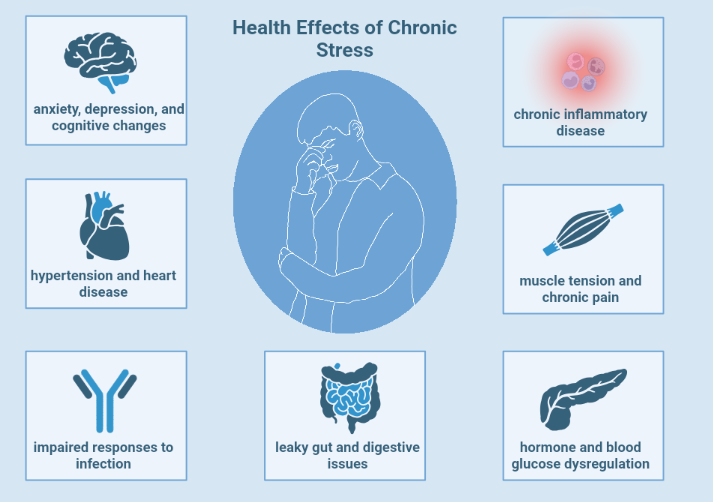
In addition to these pressing issues, we would be remiss not to mention the physical impacts of trauma and related psychiatric conditions that manifest through a wide array of diseases and symptoms. Many of these chronic diseases result from the prolonged stress of psychiatric conditions leading to malfunctions across biological systems, affecting immunity, digestion, heart function, pain, and more.
Impaired immune function: Due to the close interplay between stress and immune function, chronic stress from trauma-related psychiatric conditions can lead to immune dysregulation. Dysregulation can manifest as a reduced ability to stave off infections and prolonged low-level inflammation. This chronic inflammation is associated with a variety of diseases, including cardiovascular disease, metabolic disease, dementia, and cancer.
Digestive disarray and other complications: Since the stress response puts digestion on hold, chronic stress can lead to painful muscle spasms and reduce the body’s ability to absorb essential nutrients. Chronic stress can also alter the levels of healthy bacteria in the gut, increasing permeability of the gut barrier and allowing substances that are normally found in the intestines to leak into the surrounding tissue, where they cause widespread inflammation. This symptom is sometimes informally referred to as “leaky gut,” which can be a precursor to Inflammatory Bowel Diseases (IBDs). This may be one of the ways that stress causes flare-ups of these conditions. In other body systems, high blood pressure can compound on chronic inflammation, contributing to cardiovascular disease, while changes to blood glucose can contribute to type 2 diabetes risk. Beyond these effects, excessive stress can harm the musculoskeletal, hormonal, reproductive, and nervous systems.
Additional factors can further aggravate the impacts of trauma. For example, people with trauma-related psychiatric conditions may be more likely to engage in unhealthy behaviors, such as physical inactivity and smoking. PTSD and other mental disorders are associated with sleep disturbances, which can further damage mental and physical health. Data also show that people subjected to violence, especially sexual assault and intimate partner violence, are re-victimized at higher rates than average. Altogether, these factors aggregate to create an alarming cycle of psychological harm and disease risk.
From the massive body of research, it’s clear just how damaging trauma can be, especially when experienced by children. So, even if someone appears “physically unharmed” after a traumatic event, the scars go well beyond what we can immediately see. Even individuals who don’t meet diagnostic criteria for trauma-related disorders can still experience symptoms that interfere with their quality of life. This raises the question: how can we reduce this burden? For one, socioeconomic status is a common source of early life stress, so reducing income inequality would help to alleviate this risk factor. And although some may engage in assault and violence, it’s important that these actions are not systematically facilitated or condoned and that harm is met with accountability rather than apathy or permissiveness. Individuals can also educate themselves around trauma to know how to respond to and interact with survivors in a way that supports and facilitates healing, both in clinical settings and in everyday life. It is also vital that treatments, such as therapy to help process trauma and primary care to support physical health, are readily available and accessible to all.
Peer Edited by: Caryssa Drinkuth and Savannah Muron
Illustrated by: Claire Miller
No generative AI was used in the creation of this post.