 Tiffany Peters
If you were born between 1997 and 2012, it is likely that personal audio devices (in-ear or over-ear headphones) are an essential part of your daily routine. With the advent of the internet in the late 1990s, the development of smaller, more high-tech, and accessible computers and smartphones throughout the 2000s, and the complete takeover of direct-to-consumer media streaming services in the 2010s, young adults today are able to consume audio-containing media whenever and wherever they want. Whether we are at the gym, on our commute, or even at work (guilty!), generation Z is constantly plugged in.
For my peers and me, earphones are no longer just an accessory, but an extension of ourselves, cemented into our daily lives. However, while the options for our listening pleasure seem never-ending, many of us have heard warnings that the constant use of headphones, especially at high volumes, will be detrimental to our hearing.
Indeed, it is known that chronic exposure to loud sounds or acute exposure to extremely loud sounds can affect our hearing. While youth can make us feel invincible, our hearing does have physical limits. I set out to examine whether excessive use of personal audio devices can negatively impact our hearing over time.
How do we hear?
An understanding of how human hearing works is required to understand how it can be damaged. You can find an excellent online resource on hearing through the NIH. Briefly, after sound waves enter through the pinna, or the fleshy cartilage on the outside of our ears, they travel through the ear canal until they reach the eardrum. The subsequent vibrations at the eardrum travel through the middle ear, which is composed of a series of small bones that amplify these waves before they reach the inner ear. In the inner ear, a fluid-filled structure called the cochlea is covered with hair-like cells. The ripple of the fluid in the cochlea stimulates the hair cells, converting the sound waves into electrical impulses that our brain can interpret. These hair cells are a critical juncture in hearing loss.
How can hearing be damaged?
Noise-induced hearing loss (NIHL) is a term that encompasses multiple mechanisms of damage to our hearing pathway caused by either short term exposure to extremely loud noises (think: veterans inadvertently exposed to the noise from a blast at close range) or long term exposure to moderately loud noise (think: construction jobs with no ear protection). Damage to these aforementioned sensitive hair cells can lead to temporary or permanent shifts in hearing thresholds, making quieter sounds more difficult to hear. These threshold shifts are one way in which NIHL can manifest. In short, exposure to loud or very loud sound activates stress pathways in hair cells themselves or in the synapses between hair and auditory nerve cells, ultimately leading to necrotic cell death. Damage to or loss of these cells can reduce hearing sensitivity, resulting in an increased hearing threshold.
Can headphones cause hearing loss?
The question of whether typical earphone usage will cause acute, permanent hearing loss has a quick answer: generally, no. The noise produced by personal audio devices is unlikely to be loud enough to cause instant, permanent loss of hearing. Comfortable headphone listening occurs, on average, at about 78 decibels (dB). Acute hearing loss is known to occur after exposure to sounds greater than 140 dB for around 1 second (such as gunshots or blasts), or with slightly longer exposure of about 2 minutes at 110 dB. It is important to note that sound is measured on a logarithmic scale, so the 62 dB difference between 78 and 140 dB does not make the sound twice as intense, but several orders of magnitude (> 1 million!) more intense.
However, a Polish study of headphone usage in 81 participants aged 16-25 found that approximately 15% exhibited elevated hearing thresholds at higher frequencies, suggesting early signs of permanent hearing damage. Among those using in-ear headphones, the average hearing threshold at 4 kHz was approximately 9 decibels hearing level. Using participants’ self-reported data, the authors suggested that consistent headphone use at high volumes (~100 dB; average headphones max out at 110 dB) can result in permanent hearing damage within 4 years. While most studies I explored tend to agree that in-ear headphone usage is not the major culprit for hearing loss as we age, some authors allege the behaviour is notably ‘risky’ while others, though they acknowledge mild detrimental effects, feel that headphone usage for a few hours a day is nothing to be worried about.
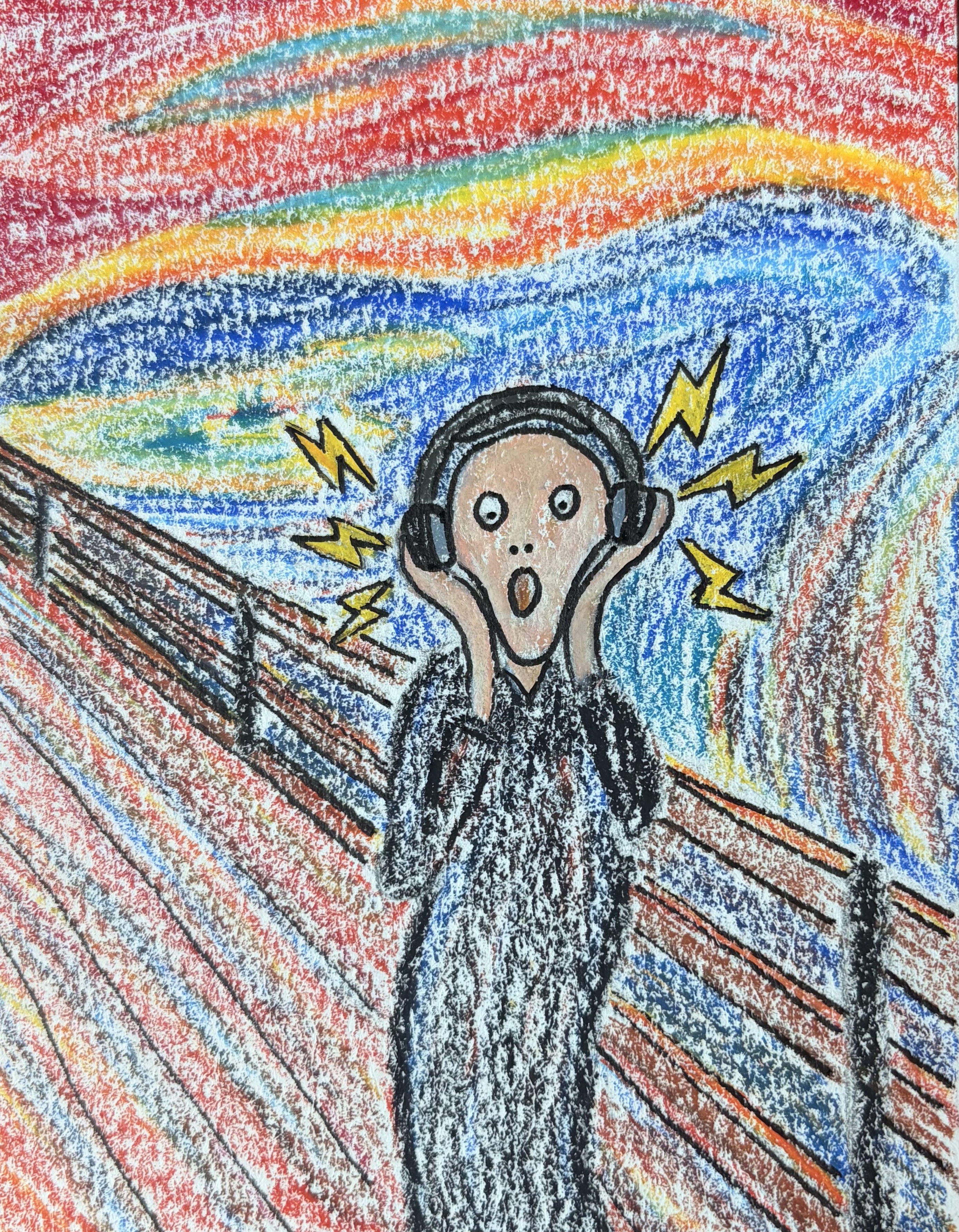
How can we protect our hearing while using headphones?
While using headphones at safe volumes can minimize the risk of permanent hearing loss, it is important to adopt good listening habits to protect your hearing long-term. Three particular pieces of advice came up again and again in my research:
- Keep sounds from headphones below 85 dB. Sustained volumes greater than 85 dB put you at significant risk of permanent hearing loss. Many smart phones have features that can measure sound output.
- It is better to cancel noise than drown it out. Use headphones with noise cancelling ability rather than turning up the volume to drown out background noise.
- Listen to your ears. If you have discomfort, ringing, or buzzing, your environment – or headset – is too loud.
Overall, it seems that generation Z isn’t doomed to deafness by 65, at least not by our constant use of headphones. Listen at a reasonable level, don’t be afraid of wearing earplugs at clubs and bars (I already do this!), and maybe invest in some noise-cancelling headphones. Happy listening, Gen-Z!
Peer Edited By: Bella Orsucci
Illustrated By: Luvna Dhawka