 Syed Masood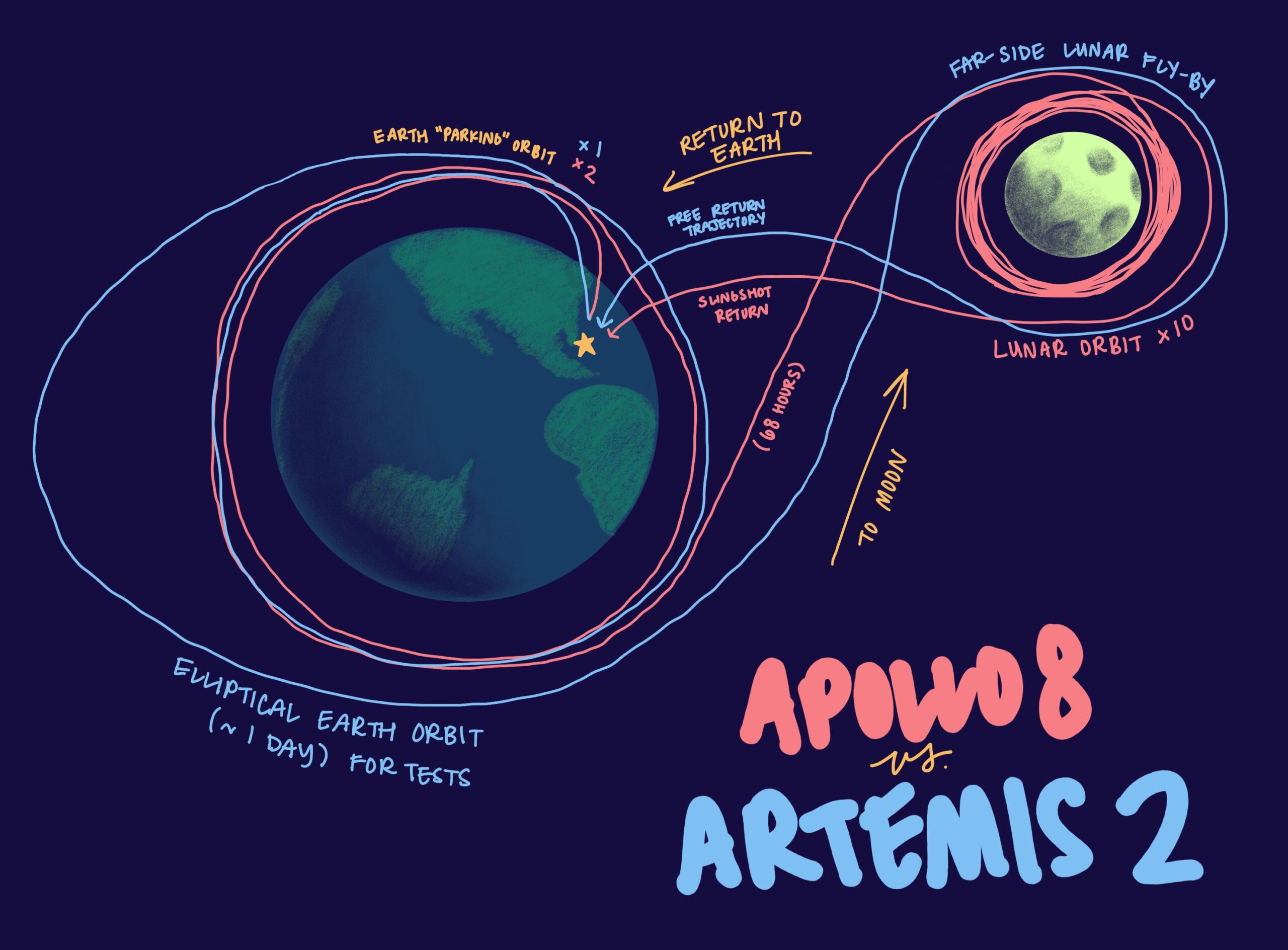
In December of 1972, as the engines of Apollo 17’s Saturn V roared against the Florida night, humanity unknowingly witnessed the closing chapter of an era. Gene Cernan and Harrison Schmitt, two figures silhouetted against the lunar landscape, became the last humans to walk on the Moon. Their departure marked not just the end of a mission, but the end of a geopolitical saga born from Cold War anxieties and nationalistic fervor. The Apollo program had been a sprint, a demonstration of technological supremacy, a race where the finish line was a single, monumental act: landing humans on the Moon and returning them safely home.
But history rarely moves in straight lines. After Apollo 17, the Moon receded into the background of national priorities. Political will dissipated, and the frontier that once symbolized humanity’s boldest aspirations became a quiet, distant memory. For more than fifty years, no human would venture beyond low‑Earth orbit. The silence was long, long enough for the Apollo astronauts to age into their nineties, long enough for the world to forget what it felt like to watch humans push into deep space.
Yet the story was never over. It was simply waiting for its next ignition.
Artemis II, launched in April of 2026, is not just another mission; it is the rekindling of a human legacy. Looping around the Moon in a trajectory reminiscent of Apollo 8’s pioneering voyage, Artemis II relived a lunar journey. But this time, the symbolism is different. Artemis is not a Cold War sprint. It is a relay. A long‑term campaign. A promise that the Moon is not an endpoint but a beginning.
The Artemis II crew, diverse in nationality, gender, and background, embodies a shift in how humanity approaches exploration. Where Apollo’s crews were exclusively American test pilots, Artemis represents a broader coalition: NASA, the Canadian Space Agency, the European Space Agency, and commercial partners. Three crew members: the first woman, the first person of color, and the first Canadian astronaut to travel around the Moon, were part of this mission, signaling that lunar exploration is no longer a symbol of national dominance but of collective human ambition.
Artemis II is also a technological proving ground. Unlike Apollo, which relied on analog systems and a tolerance for risk that would be unthinkable today, Artemis is built on digital avionics, automated navigation, and spacecraft designed for repeated use. The mission tests manual piloting in high‑Earth orbit, deep‑space communication, and the performance of the Orion capsule under conditions no crewed spacecraft has experienced since 1972. These tests are not symbolic; they are essential steps toward Artemis III and IV, which aim to establish a sustainable human presence on the lunar surface by the end of the decade.
To understand Artemis, one must understand the weight of Apollo’s legacy. Apollo was proof of possibility. It demonstrated that humans could leave Earth, navigate the void, land on another world, and return. It gave us the first lunar geological samples, the first human footprints on another celestial body, and the first images of Earth rising over the lunar horizon, images that reshaped environmental consciousness and global identity.
But Apollo was also fleeting. Its missions were short, its infrastructure temporary, and its geopolitical motivations unsustainable. Artemis, by contrast, is designed for permanence. It aims to build a lunar space station and to establish long‑duration surface operations. It is not about planting flags; it is about building foundations.
Where Apollo sought to win a race, Artemis seeks to build a future.
The importance of Artemis lies not only in its scientific potential but in its cultural and historical influence. Artemis II marks the moment humanity reclaims its deep‑space heritage. It bridges a half‑century gap between generations, between those who watched Apollo by the glow of black‑and‑white televisions and those who grew up seeing the Moon only through photographs.
As NASA describes the Artemis II emblem, framed by Apollo 8’s Earthrise, the mission represents both our distant destination and the home we return to. The final Apollo missions closed a chapter defined by urgency, rivalry, and audacity. The Artemis missions open a chapter defined by collaboration, sustainability, and vision. Apollo showed us what humans could do. Artemis asks what humans should do next.
Fifty years after Apollo’s last footprints faded into lunar dust, Artemis is writing the next lines of a story that began with Sputnik, surged with Apollo, and now continues with a new generation of explorers carrying the baton forward.
The ignition has begun again.
Illustrated by: Julia Drennan
Peer Edited by: Savannah Muron and Luvna Dhawka