 Elizabeth Abrash
With winding vines and fragrant flowers, kudzu seemed an ideal ornamental plant. First introduced to the United States in 1876, its purpose was nothing more than to curl demurely across porches and garden walls. But by the 1930s, as dust storms were battering the US, kudzu seemed destined for a more heroic calling. A combination of historic droughts, high winds, and poor land management led to drastic soil erosion. Determined to restore America’s farmland, the newly established Soil Erosion Service sought the ideal cover crop – something with deep roots that would grow quickly and restore nutrients to the soil rather than depleting them.
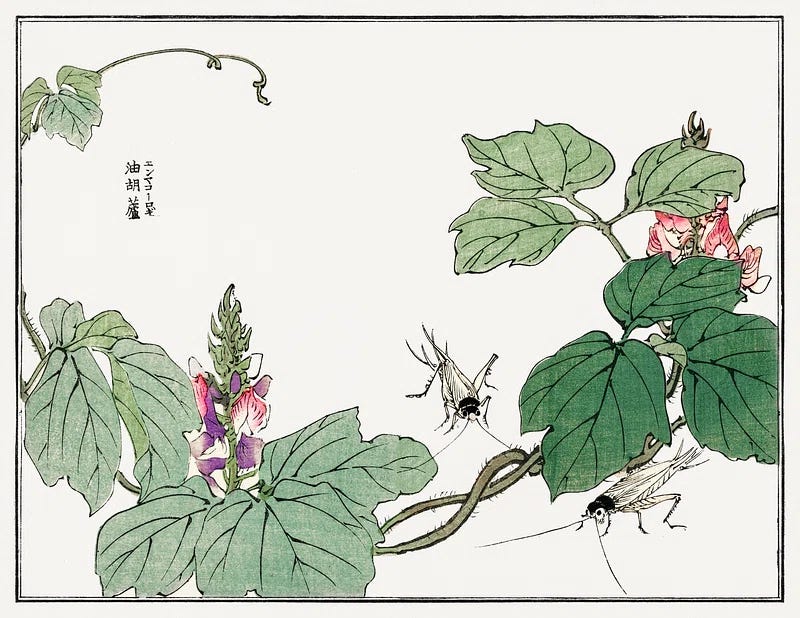
Kudzu seemed made for the job. Its roots are massive, regularly stretching more than six feet into the soil. Like other legumes, kudzu has a symbiotic relationship with a class of bacteria that can take nitrogen from the air and add it to the soil. And kudzu is fast, growing up to a foot per day. By 1946, 3 million acres of kudzu had been planted as part of a government-funded program to save American farmland. But as the saying goes – “you either die a hero or you live long enough to become the villain.” The same features that gave kudzu its heroic potential would eventually give it a reputation as a blight on the South.
As farmers abandoned their farms, kudzu grew rampant. Released from its garden confines, without predators or humans or sufficiently cold winters to check its growth, kudzu spread across the southeastern United States, taking on a new identity. No longer a lovely decoration or a heroic cover crop, it instead became known as “the vine that ate the south” – an ambitious villain and a prolific weed.

For many, kudzu evokes a feeling of horror – it creeps across landscapes and wraps itself around trees, strangling them until they collapse under the weight of the vines. It smothers hillsides and abandoned houses, leading to miles of landscape that hold only eerie mounds of green – an echo of what once was. And kudzu is difficult to kill. Cutting away the entire vine may help in the short term, but the plant can draw energy from those deep, starchy roots and re-sprout. And if a single clipping is left behind, it too can grow roots and begin again. Perhaps the best method of combating kudzu is animal grazing – cows and goats rarely leave clippings behind and will eat down the entire vine. But the animals need to be contained, and they need to re-graze to combat new sprouts until the roots have depleted their energy. To add insult to injury, kudzu’s deep roots aren’t actually that good at preventing erosion. Ideally, the Soil Erosion Service would have chosen something with fibrous roots, which grow outwards and form a mat that keeps topsoil in place.
So, what is kudzu good for if not erosion prevention? The leaves, flowers, vine tips, and roots of the kudzu plant are all edible. In many parts of Asia, cooking with kudzu is commonplace – starch extracted from the roots is used to make noodles, thicken soups, or make a cold-weather drink called kuzuyu. And eating kudzu has started to catch on in the US – the leaves can be cooked like spinach or collards, and the blossoms can be used to make a simple syrup or kudzu jelly. Kudzu has also been used in traditional Chinese medicine to treat fever, diarrhea, cardiovascular disease, and hangovers. But when it comes to alcohol, most modern uses focus on increasing the side effects of alcohol rather than decreasing them.
There are two major steps to alcohol metabolism. First, ethanol is broken down into acetaldehyde, a toxic compound that is responsible for many of the negative effects that come with drinking alcohol – a flushed face, nausea, and an increased heart rate. In the normal course of things, acetaldehyde is broken down further by a protein called ALDH2, relieving the hangover symptoms. But 8% of people have a mutation in ALDH2 that reduces their ability to break down acetaldehyde, resulting in stronger side effects to drinking and, in some cases, an aversion to alcohol. Individuals with a mutated ALDH2 are 75% less likely to develop an alcohol use disorder, and an experiment in mice showed that deleting the gene for ALDH2 dramatically decreased ethanol consumption.

This means that targeting ALDH2 may be a promising therapeutic approach for counteracting alcohol use disorder. And that’s where kudzu comes in. Kudzu extract contains several flavonoids, a class of compounds that often have anti-oxidant and anti-inflammatory properties. These compounds may inhibit ALDH2, making kudzu extract a potential treatment for alcohol use disorder. In one study, ethanol-preferring rats were given a dose of kudzu extract, leading to a 50% reduction in alcohol consumption. And these results appeared to extend to humans. In another study, participants were given either a pill containing kudzu extract or a placebo pill, along with 6 bottles of their favorite beer. The people who received the kudzu pill drank more slowly and consumed less beer than those who received a placebo.
So, is kudzu a hero or a villain? Will kudzu treat alcohol use disorder, or will it destroy the South? Kudzu is complicated. It has lovely flowers, but it isn’t very good at preventing soil erosion. It swallows landscapes, and it strangles trees (though not to the extent we might think). Yet, throughout history, it has served as a medicine. Regardless of its reputation, kudzu is here to stay, and it’s worth the effort to understand the uses and benefits that are concealed in this creeping vine.
Peer Edited By: Pari Dhayagude
Illustrated By: Katie Holmes