 Rachel Burdorf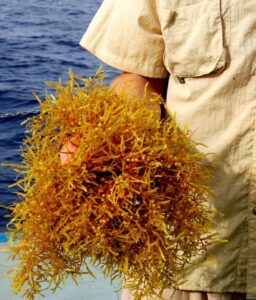
The hearts of most oceans are cold, deep, and nearly dead. No nearby shore can deliver nutrients to support algae or plankton, and no plant can reach 3,000+ meters from the ocean floor to the surface. Without primary producers to turn sunlight into food, there is no foundation for a food chain. Ocean centers are among the deadest and least productive waters in the world. The Atlantic Ocean is different. The heart of the Atlantic is the Sargasso Sea, an ecosystem that’s full of life, often referred to as a golden floating rainforest. The secret? Nomadic seaweed.
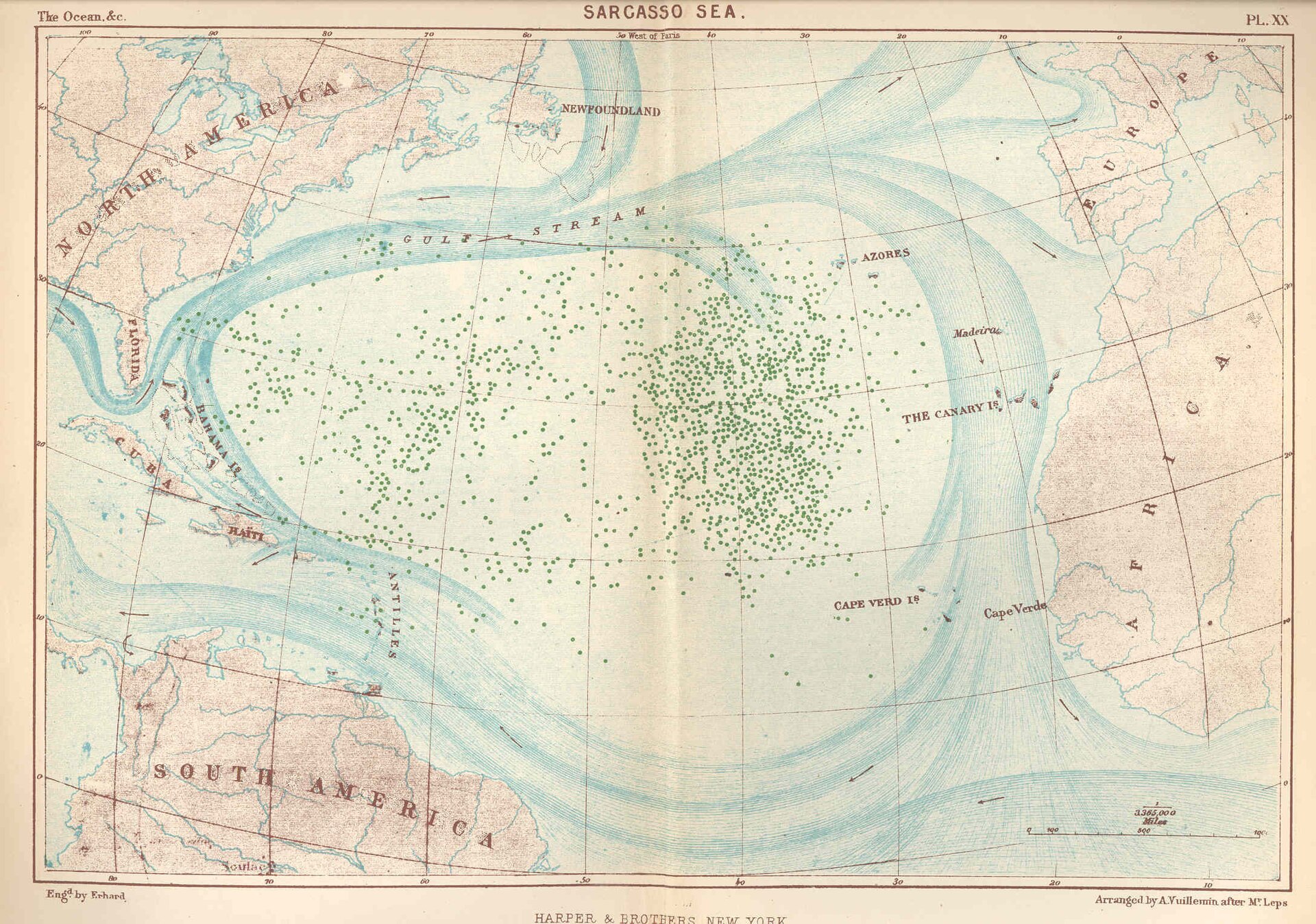
Most seaweed, especially kelp (the form most people think of when they imagine seaweed), anchors to the seafloor and never moves. The seaweed which powers the Sargasso Sea – aptly named Sargassum – has a completely different strategy. With the ocean floor completely out of reach, Sargassum instead evolved to spend its entire life floating on the surface in clumps, untethered. It follows the Atlantic ocean currents in a circle so massive that it takes more than a year to complete, from the Caribbean up north along the Gulf Stream, across to Europe, down to Africa, and back to the Caribbean. Sargassum reproduces asexually; as one seaweed clump travels, it grows slowly, and when it is big enough, the current naturally breaks it into multiple clumps.
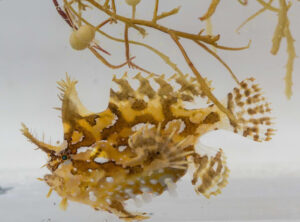
If you were a small marine animal, like a Sargassum Swimming Crab or a Sargassum Shrimp, these seaweed clumps would be your shelter, as well as a floating buffet. Even small Sargassum clumps are self-contained ecosystems. My personal favorite creature in the ecosystem is the Sargassum fish, a talented hunter which walks along seaweed branches using its fins and camouflages astonishingly well.
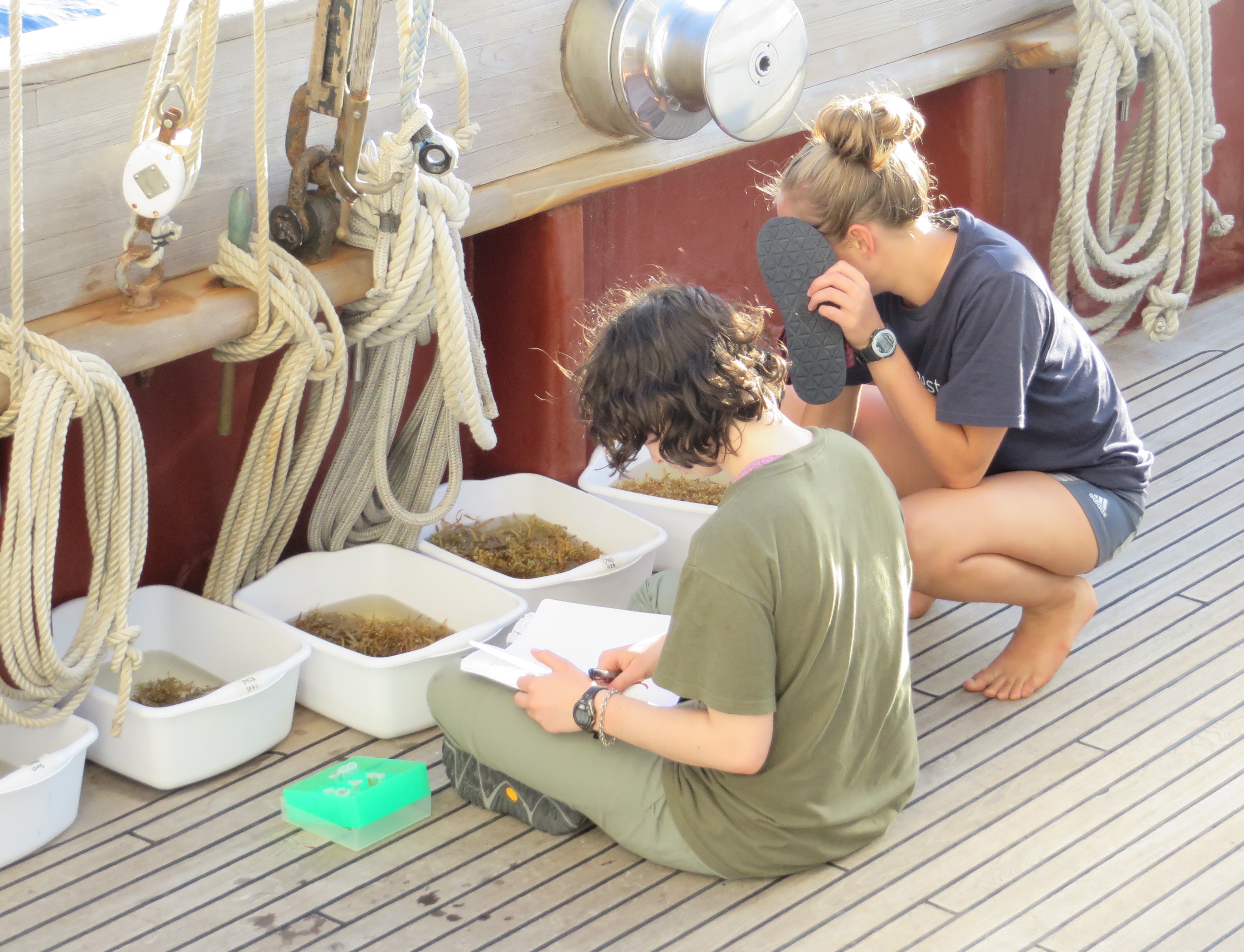
In 2018, I did a college research semester with the Sea Education Association. We sailed through the Sargasso Sea, catching and releasing seaweed clumps to tally up the critters in them. The clumps were easy to spot, little patches of brown-gold on the ocean surface. But they were rare. The exception was the day we sailed through what looked like a whole seaweed convention – clumps everywhere, some of them poolsized mats. It clicked for me that day, how this small floating food chain could support an entire ocean ecosystem. But after that day it was rare again.
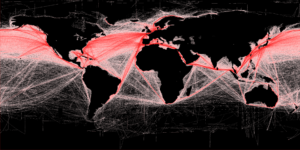
It hasn’t always been that way. The earliest well-documented records of Sargassum seaweed is actually from Christopher Columbus journaling about massive mats of seaweed in 1492. Based on his notes (the sailors were afraid that the boat might become tangled in so much seaweed), my single day of abundance would have been normal back then. The Sargasso Sea ecosystem has dwindled since then, with several major known causes. One of the greatest enemies of Sargassum seaweed is modern shipping traffic – and one of the largest shipping lanes in the world cuts through the Atlantic.
The modern day scarcity compared to past centuries may come as a surprise to people on the Atlantic coast of South American or Caribbean countries, who have dealt with huge mats of seaweed escaping the circular ocean current and piling up to rot on beaches in recent years. The main driver of mass wash-ups is likely fertilizer from agricultural runoff increasing seaweed biomass, and it’s not a natural part of the ecosystem, but it has given Sargassum something of a bad reputation.
But this seaweed is a hero, not a villain, in its own ecosystem and beyond. If we zoom out to consider the whole Sargasso Sea, there are countless clumps completing the slow circle. This provides food for other, bigger animals to survive in the Sargasso sea. Many species rely on this habitat – European and American eels, several critically endangered turtles, many economically important fish species, many sharks, and whales, to name a few. These animals spend time in the Sargasso Sea during a variety of life stages, such as breeding, early life, and yearly migrations. It’s a good strategy – if I was a marine animal, I’d hang out at the buffet too.
The ecosystem is under threat by shipping, plastic pollution, and climate change, and has been worn down over the centuries – but even in its current reduced form, it’s an impressively productive ecosystem which supports other ecosystems and economies beyond the Atlantic. And it’s all made possible by Sargassum seaweed, which is able to turn sunlight into food while riding the currents. Sometimes, the trick really is just to go with the flow.
Peer edited by: Terrance Foster